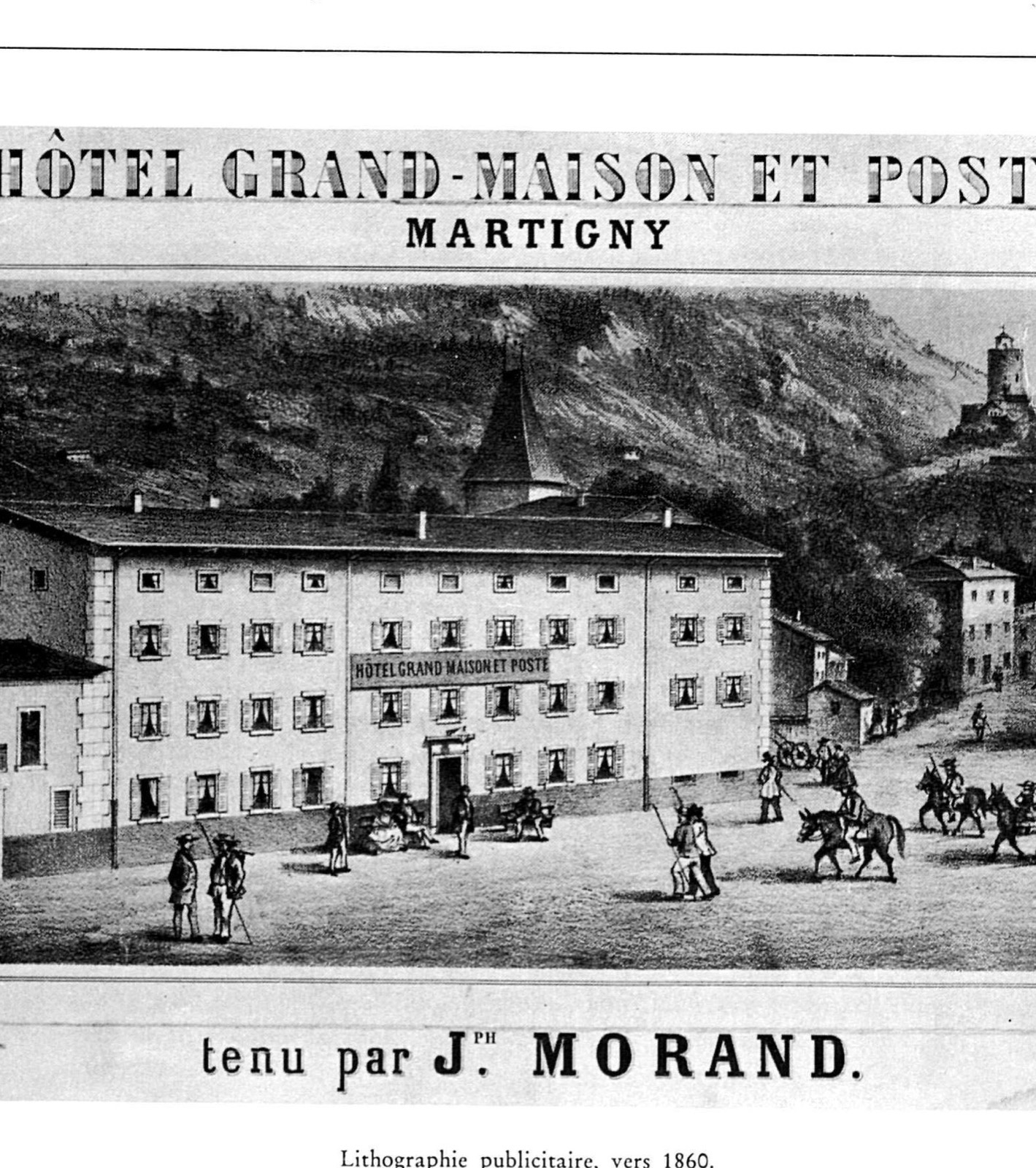
15th — 17th centuries
Based on Armand Brulhart, Bulletin n°1 of Vieux Martigny (1977) and the official records of the Valais Council of State.
First recorded in 1462 under the Latin name Magna Domus. The house is already known as Magnum Hospitium — great hospice or great inn — when it passes to Antoine de Châtelard, sold by noble Peronnette of Martigny, a descendant of the last Vidames.
One hypothesis: acquired by Georges Supersaxo in 1502. The Kalbermatten family of Sion becomes owner between 1543 and 1547 — and remains so until the mid-19ᵗʰ century.
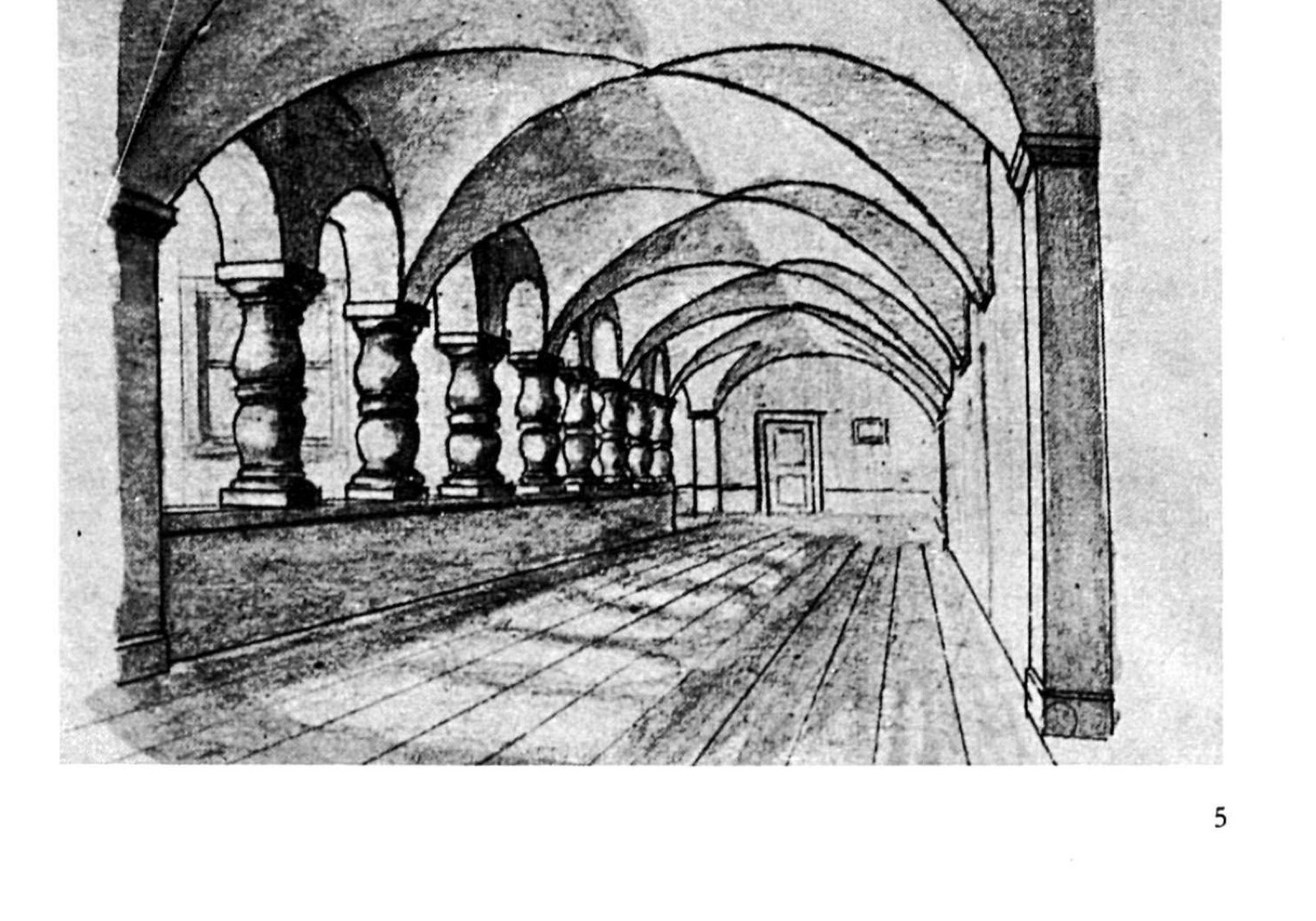
The massive walls of a former cloister, now the Grand’Maison hotel.
— Gourgdault, 1879
Architecture
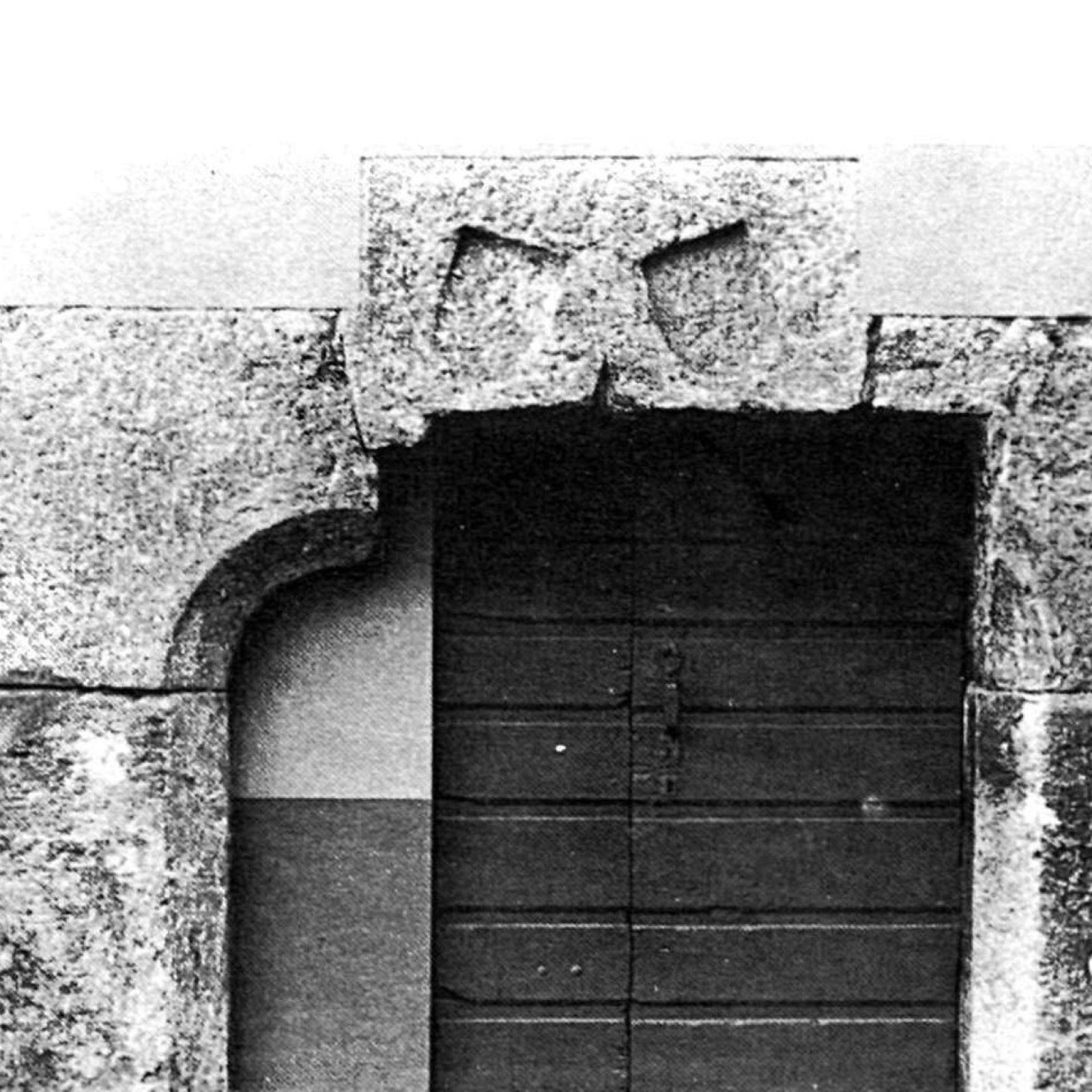
Gable roof, eleven bays across three levels plus an attic. At the centre, a wide-lintel portal that once bore the Kalbermatten arms.
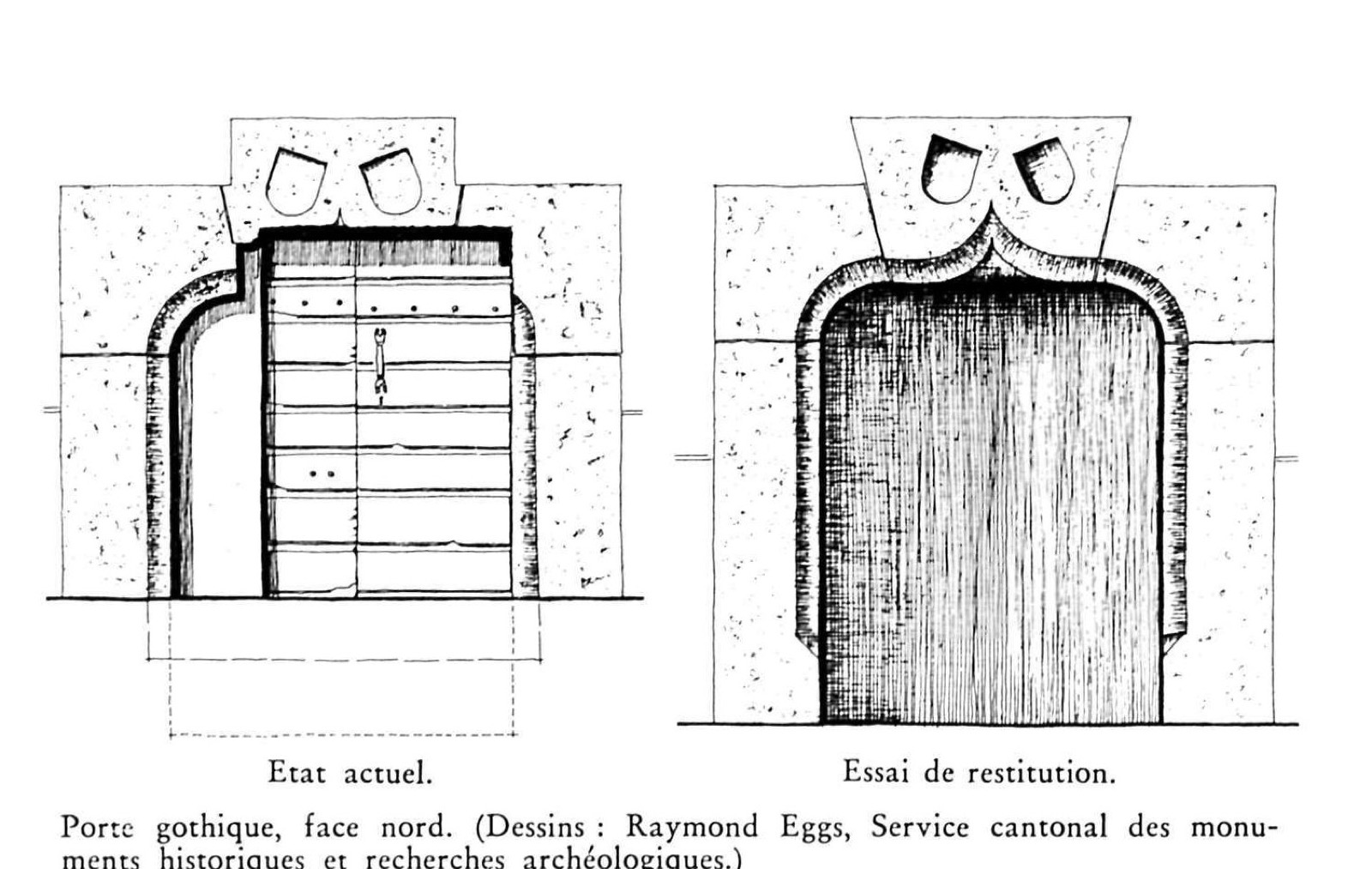
During the 1977-78 works, a gothic stone door frame was rediscovered and restored on the north façade. The rectangular northwest tower — a 15ᵗʰ-century type — features simulated machicolations and a steep shingled pavilion roof.
The only dated material preserved: the stove stone bearing initials “N K” (Nicolas de Kalbermatten) and “C W” (Cécile Waldin), 1626.
Reconstruction
The gothic frame, mutilated over time, was reconstructed from the surveys of Raymond Eggs, deputy cantonal archaeologist. Originally, the lintel featured a characteristic accolade, removed during later transformations.
Graffiti
During the 1977 façade-stripping, segmental-arched bays were uncovered on the west wall. Their splays are covered in “wild” inscriptions drawn in red chalk — sigils, monograms, coats of arms, Latin mottos, dated between 1541 and 1619.
Recognisable: the Supersaxo motto — WGW (“Was, wie, wo, wann Gott will”) — a shield with the arms of Savoy, and the Kalbermatten bull beside the inscription “24 April 1619, return.”
Among the names recorded: Antonius Mayers (1593), Carolus a Monthey, Iohan Cvrton, Mro Antonio Zono, Jacob Ry, Emard Farnex.
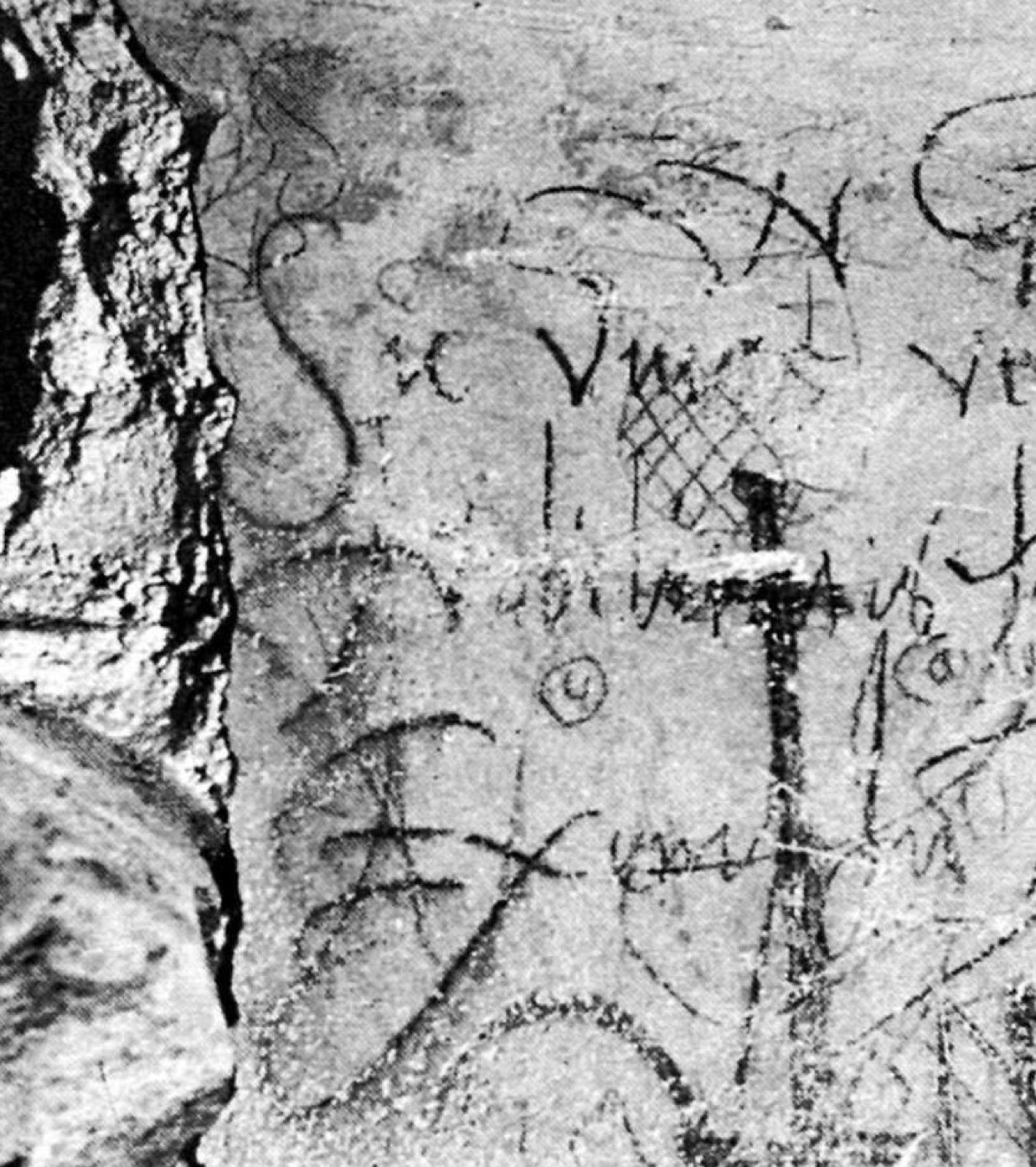
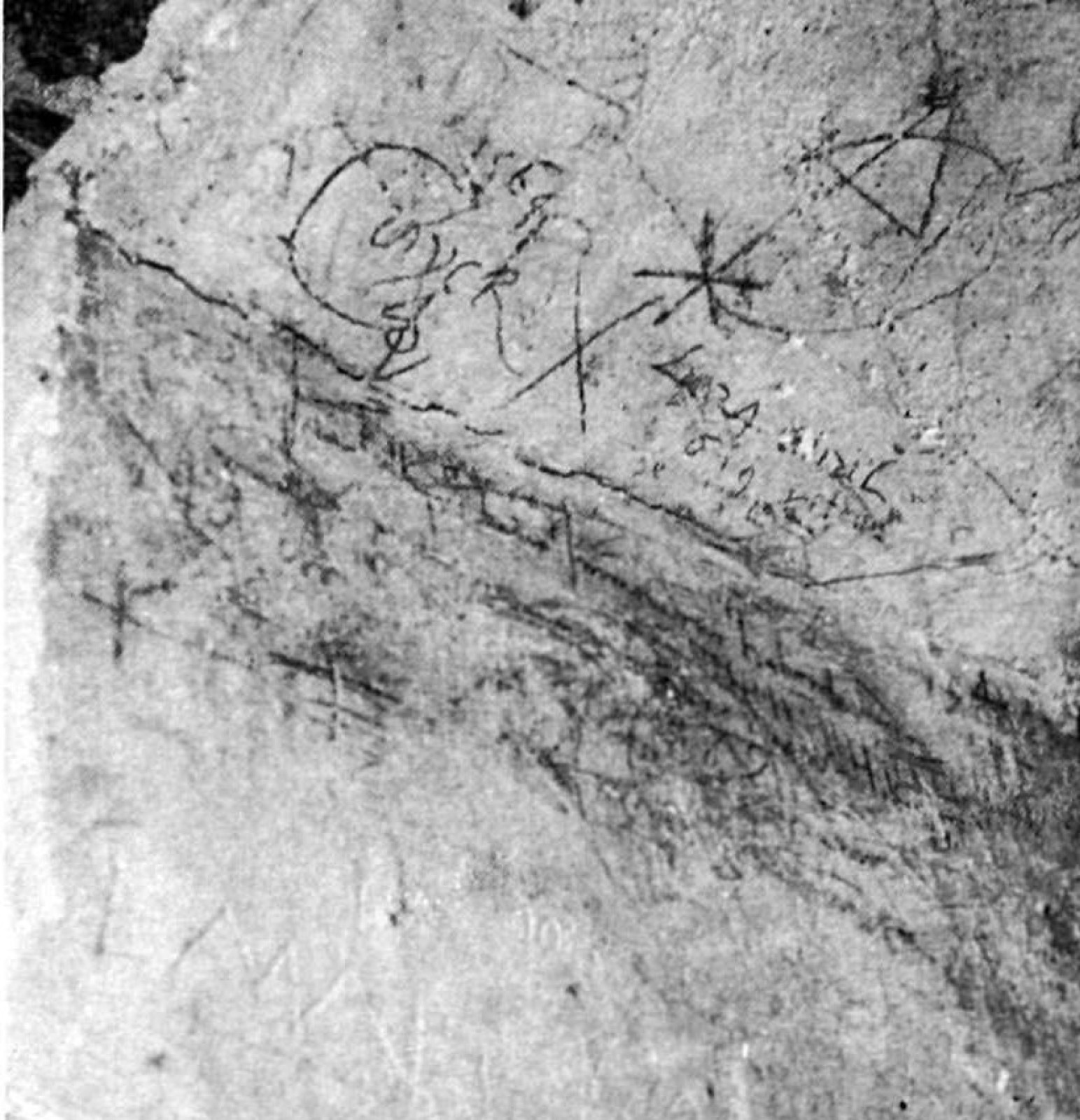
Photos Yan Höll · Bulletin n°1 of Vieux Martigny, 1977
Six centuries
From the Magna Domus to today’s art venue.
First written mention. The building, already known as Magnum Hospitium, passes to Antoine de Châtelard through a sale by Peronnette of Martigny.
Probable acquisition of the house by the famed Valais statesman.
The house passes to the Kalbermatten of Sion, possibly through purchase from the Supersaxo estate. It will remain their property until the mid-19th century.
Captain Nicolas Kalbermatten commissioned the expansion and embellishment of the building. The monumental staircase tower and current appearance date from this period.
The baroque merchant Kaspar Jodok von Stockalper often stayed at the Grand Maison, then run by Madame Annilie Meschler, mother of Étienne Ganioz.
The Grand’maison became a popular inn. Many famous figures stayed there before crossing the Grand-Saint-Bernard or Forclaz passes.
The postal service is attached to the building under the name “Hôtel Grand’Maison et Poste”.
Valentin Morand was the innkeeper, followed by his son Joseph (1822-1865), the last keeper of the Grand Maison, then known as “Hôtel Morand”.
The Grand Maison now has only one resident: Madame Élise Morand.
A Martigny bank acquires the building and sells it piecemeal to private owners. This subdivision preserved many original features.
Founding of the Vieux Martigny Association by Pascal Couchepin. Restoration of the Grand Maison, rediscovery of the gothic door and the 16th-17th-century inscriptions.
The tower’s steep roof is renovated with cantonal and municipal subsidies through the installation of new shingles.
Beneath the vaults of the Grand Maison, a new artistic and cultural space continues the tradition of hospitality, encounter and inspiration.
The illustrious travellers
At the crossroads of the Grand-Saint-Bernard and Forclaz routes, the inn welcomed the greatest writers and figures of the 19th century.
A stone’s throw from the famed residence
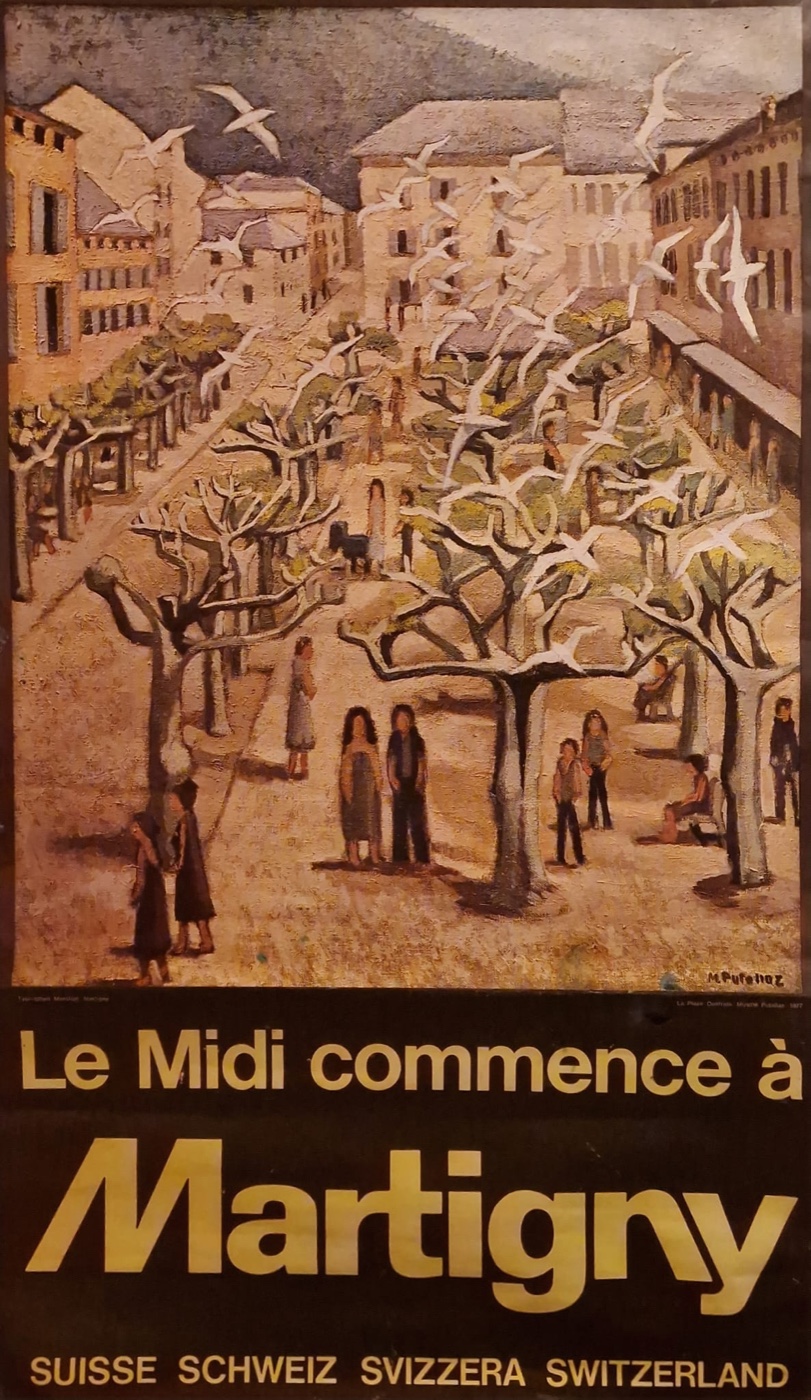
“Noon begins in Martigny.”
The phrase travelled across Switzerland — Mizette Putallaz painted its emblematic image for a national tourism poster: the Place Centrale at noon, its plane trees, its passers-by, the white flight of birds.
Designed in 1818, three years after Waterloo, the Place Centrale is Switzerland’s first modern square. A thousand inhabitants then — already a crossroads between Alps and Rhône.